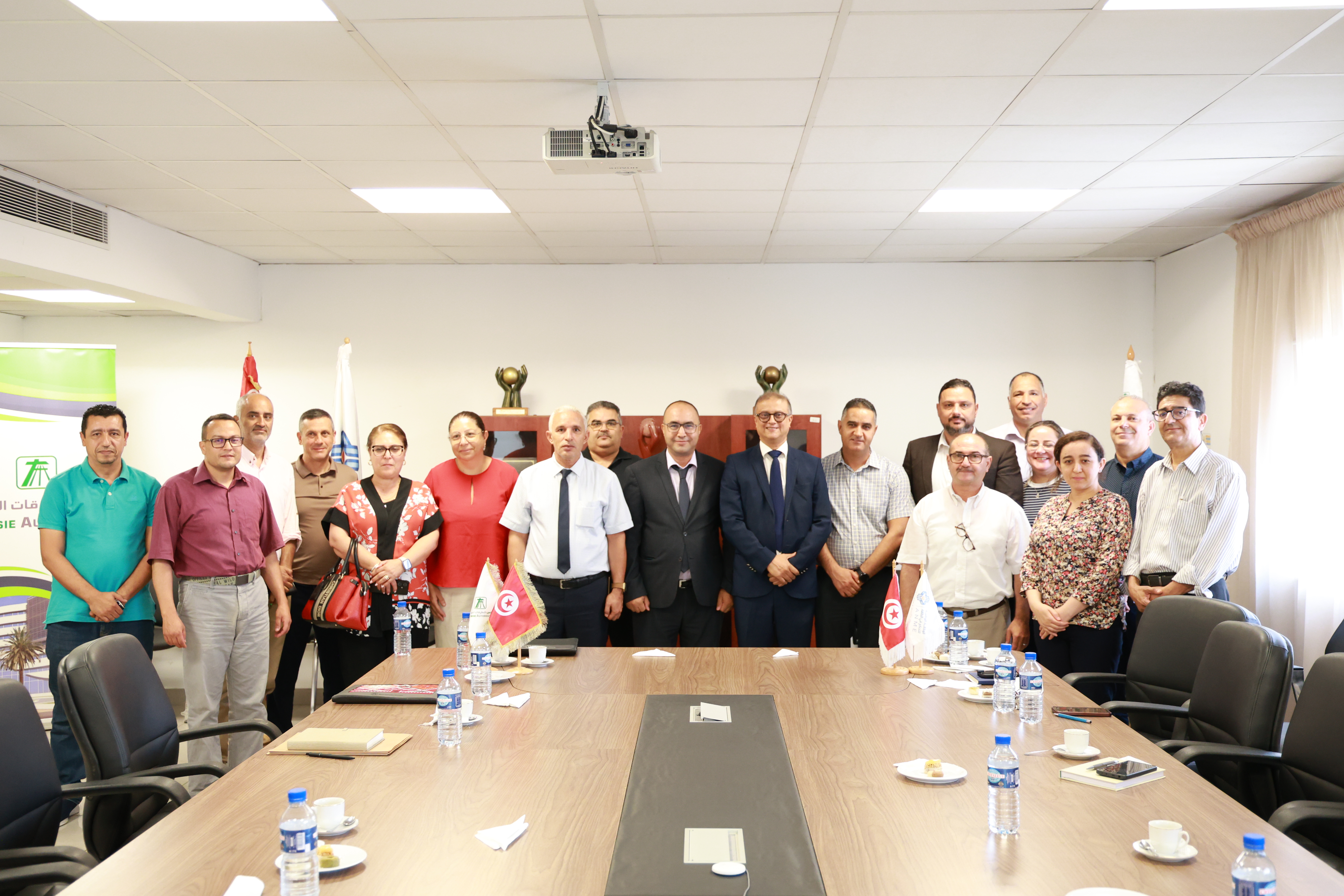
As part of the State’s efforts to advance the energy transition and strengthen cooperation among public institutions, the National Agency for Energy Conservation (ANME) and Tunisie Autoroutes signed a partnership and cooperation agreement on Monday, July 13, 2026, at the Agency’s headquarters. The signing ceremony was attended by Mr. Nafaâ Baccari, Director General of the Agency, Mr. Ahmed Ezzedine, Chairman and Chief Executive Officer of Tunisie Autoroutes, along with senior officials from both institutions.
On this occasion, Mr. Nafaâ Baccari emphasized that the agreement represents an important step towards embedding the principles of the energy transition within public institutions. He noted that Tunisie Autoroutes is one of the national companies capable of making a significant contribution to the successful implementation of Tunisia’s national energy transition programme.
He further explained that the company intends to integrate renewable energy solutions across its facilities along the motorway network. The National Agency for Energy Conservation will provide technical support throughout the implementation of this initiative, enabling Tunisie Autoroutes to serve as a model for other public and private institutions and encouraging wider participation in energy efficiency programmes and renewable energy development.
Mr. Baccari also noted that cooperation between the two institutions will include environmental initiatives aimed at reducing carbon emissions, notably through the Agency’s contribution to the tree-planting campaign that Tunisie Autoroutes will organize in September 2026.
For his part, Mr. Ahmed Ezzedine stressed that Tunisie Autoroutes places great importance on improving its energy performance and environmental sustainability, considering this agreement as the foundation of a comprehensive strategic partnership with the National Agency for Energy Conservation.
He explained that the partnership will cover the implementation of energy management programmes across the company’s infrastructure, equipment, and vehicle fleet, the development of renewable energy projects, and the organization of joint awareness campaigns for motorway users to promote rational energy consumption and strengthen the principles of the energy transition across various sectors.
This agreement reflects the commitment of both institutions to supporting Tunisia’s national energy transition policy, promoting renewable energy and energy efficiency, and contributing to the country's sustainable development objectives and the reduction of carbon emissions.